

The agency’s pitch deck promises four LinkedIn posts a week. It sits on your desk beside your content lead’s notes from twelve customer conversations, none of which became a post, and before the budget meeting you have to decide whether to pay a retained agency for LinkedIn and content, or train the existing team to do it.
Train your own team when the people who know your buyers can own LinkedIn and content after the course, and retain an agency only when nobody inside has the time to own it. From £1,200 for half a day, private team training is a one-off cost set against a retainer that recurs every month. Our corporate social media training for in-house teams builds the skills and the ownership, yet it cannot create hours your team does not have, which is the real test here.
In this guide, training your own team means paying once for private, bespoke instruction so the staff who already know your buyers can plan, write and measure LinkedIn and content themselves, instead of paying an agency a monthly retainer. It is written for a Head of Marketing weighing the agency and services line against the learning and development budget. We sell that team training and have also run a working PR, social and content agency since 2009, so we earn money on both sides of this decision.
We taught senior people at Huthwaite International, a B2B sales training business, how to run social media with a plan and how to turn their own expertise into thought leadership content. Huthwaite reported 55 Tier 1 leads from profiling the stakeholders it wanted to reach, and more than £100,000 in business converted from those leads, according to our Huthwaite International case study. Huthwaite counted those leads itself, and they came from senior people using their own profiles, which no agency can own for them.
Why are UK marketing teams weighing training against agency retainers in 2026?
UK marketing teams are weighing training against retainers because budgets have split: the IPA’s Q2 2026 Bellwether Report found that 23.8% of UK companies raised their marketing budgets while 16.9% cut them. The same IPA report found the net balance of firms expecting better financial prospects for their own business fell to -9.6%, from +0.6%, which means more firms now expect things to get worse than expect them to improve. With outlooks that weak, a finance director questions a monthly agency retainer harder than a one-off training fee, because a retainer stops delivering the day it ends while trained skills stay in the building.
Training budgets are squeezed too. The Department for Education’s Employer Skills Survey 2024 put UK employer training spend at £1,700 per employee, down from £1,960 in 2022. It found 59% of employers had trained staff in the last 12 months, down from 60% in 2022 and 66% in 2017.
The IPA’s Q2 figures put net growth in PR budgets at just +1.4%, so there is little new money for an agency line to grow into. With training spend per employee that tight, it has to buy skills that last. List every task the retainer covers and mark each as needing a specialist or someone who knows your buyers, because the second list is where that training spend belongs.
Where does an in-house LinkedIn skills gap sit?
Social Media Training’s pre-training survey of 53 Bango staff found that 62% were not sure what to post on LinkedIn, 51% were not comfortable with analytics and 38% posted less than monthly, so the in-house gap at Bango sat in confidence and content ideas more than in platform mechanics. The Department for Education’s Employer Skills Survey counts a skills gap where an employer judges staff to lack full proficiency, and Bango’s staff already knew the product and the customers, so their gap was one of confidence rather than capacity, according to Department for Education and Skills England’s Employer Skills Survey, Calendar year (July 2025). A short course tailored to a team can close a confidence gap, though it cannot create the hours a capacity gap needs.
Bango‘s training was then split by level into two sessions of up to 3 hours, with separate courses for individuals and for the marketing team.
I would survey your own team first: what they post, how often, how confident they feel with analytics, what stops them, and who approves it. Where confidence differs by level, LinkedIn marketing training for teams can be split the way Bango’s was. If the answer to “what stops them” is not knowing what to post, our guide to what social media content gets businesses the most engagement is a useful starting point.
Can a trained in-house team get results an agency would charge for?
Yes, when the trained staff are the people buyers want to hear from: ENGIE UK reported a 7.9% increase in its share of voice on social media after Social Media Training trained senior managers from across the business to post as themselves. The data suggests the reach sits with named experts, because Social Media Training’s Northumbria University project raised participants’ average online influence, meaning how far their posts reach and draw a response, by 59%, with the biggest rise, 148%, in Energy Materials and Systems. An agency can write posts, but it cannot be your engineer, your academic or your sales director.
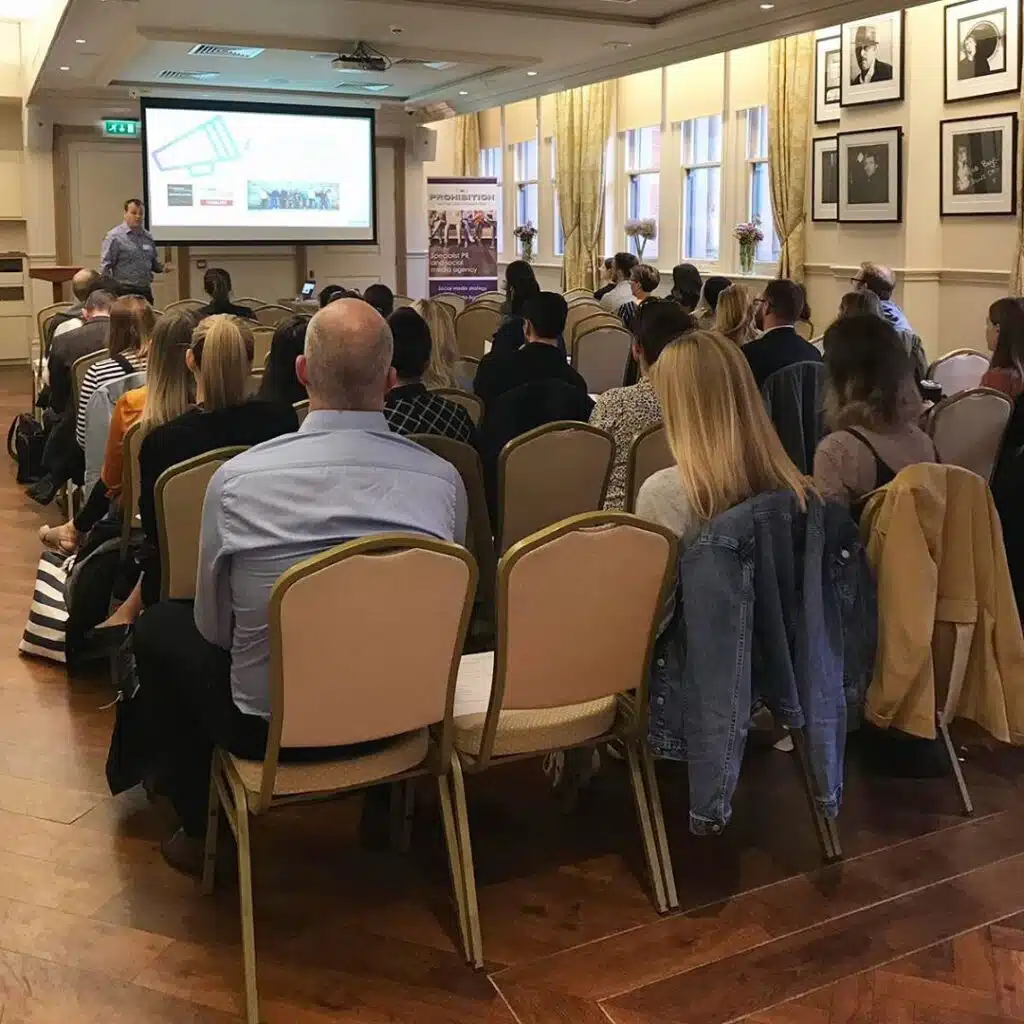
Huthwaite International’s 55 Tier 1 leads came from the same pattern of senior people using their own profiles. Our guide on how to get B2B leads from LinkedIn messages without spam covers that approach. Verve, a research and insight business, followed its LinkedIn masterclass with one-to-one sessions so each expert left with a personal plan, then booked Phase 2 coaching after the masterclass. Verve’s choice was to keep building the skill inside the business rather than hand the posting to someone outside it.
Name three people whose profiles your buyers would read, and start with them. Score their influence before the first session, so you have a starting point to report against in week eight.
What does it cost to train your team instead of paying an agency retainer?
From £1,200 for half a day is what Social Media Training charges for private team training of up to six people, excluding VAT, a one-off fee set beside an agency retainer that bills every month. From running our own agency since 2009, my view is that even a modest LinkedIn and content retainer usually costs more in one quarter than that half day costs once, though scopes vary, so ask any agency for its full twelve-month total. The usual in-house alternative is a hire, and the CIPR’s 2026 State of the Profession report, a survey of 738 PR professionals, puts average full-time income for UK PR professionals at £64,817.
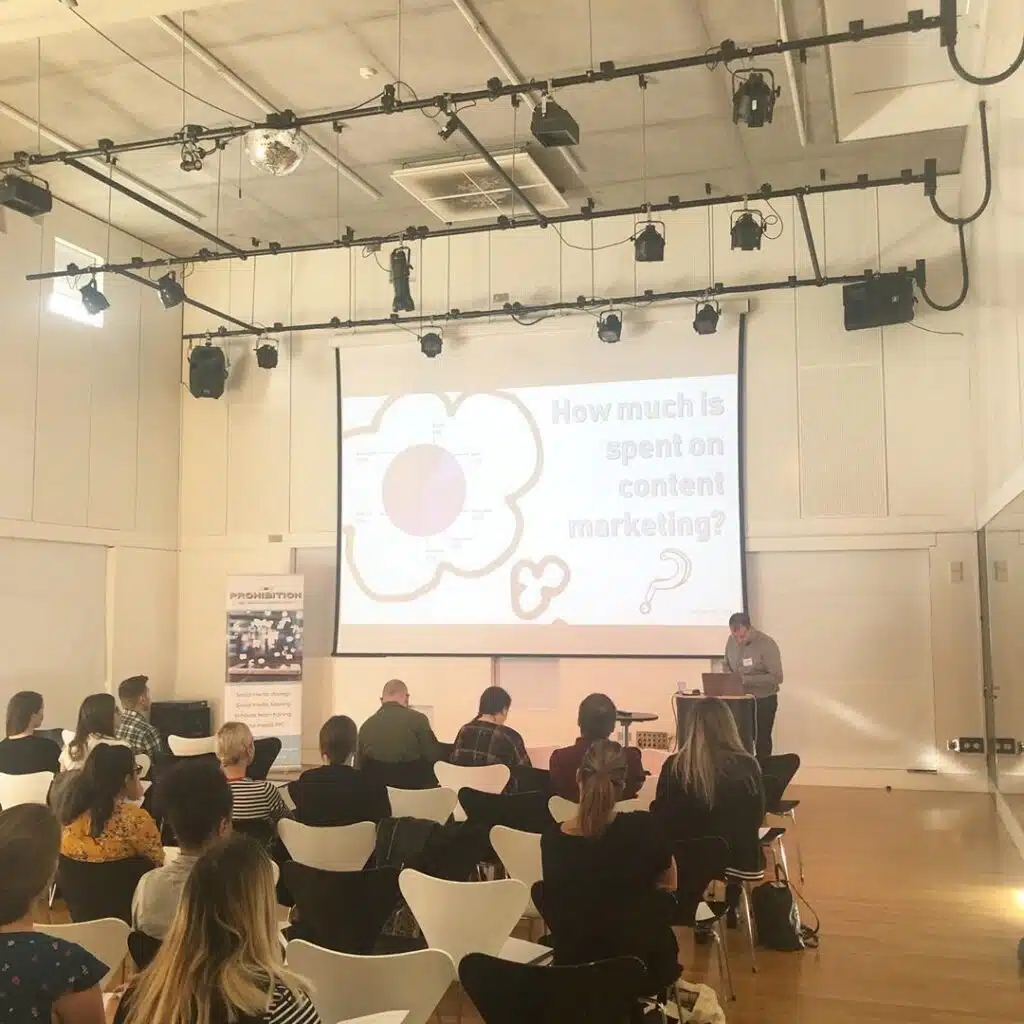
The hidden cost on the training side is staff time, because trained people still need about two hours a week each to plan and post. Add those hours to the training fee before you set it against the retainer, and if you cannot free them, buy the agency.
For the training side of that comparison, see our corporate social media training prices and formats. For a per-seat view, see our guide to how much B2B marketing training courses cost per seat.
How should you score agency against training for your own team?
I built this agency-or-train scorecard from running Social Media Training’s PR, social and content agency alongside its team training since 2009, and the test I apply is whether someone inside your organisation will own LinkedIn and content once the course ends. The scorecard turns that test into seven questions on expertise, ownership, time, production needs, expert profiles, budget and sign-off, each scored from zero to two. A total of ten or more points to training your team, six to nine points to training the core skills and buying in specialist production, and below six points to retaining an agency.
Agency-or-train scorecard for LinkedIn and content
| Question | Zero points | One point | Two points |
|---|---|---|---|
| Do staff hold the expertise buyers want? | No | On some topics | Yes, buyers seek them out |
| Will a named person own the work after training? | Nobody | Someone, part time | Yes, in their objectives |
| Can each person free about two hours a week? | No | Some weeks | Yes, protected in diaries |
| Is the gap confidence or specialist production? | Mostly video or paid media | A mix | Mostly confidence and ideas |
| Does the work depend on experts’ profiles? | No, the company page | Partly | Yes, experts are the draw |
| Is the budget one-off or recurring? | Recurring services line only | Either | One-off learning budget |
| Is sign-off fast enough to post weekly? | No, posts wait days | Sometimes | Yes |
The confidence row reflects the Bango survey described above. Ownership is the row I see fail most often, usually while the person expected to own the work is sitting in the room looking at the ceiling. Keep strategy in-house, buy in only specialist production, and score the card with that person present.
How do you bring LinkedIn and content in-house over eight weeks?
Bring LinkedIn and content in-house over eight weeks by surveying your team, training by level, coaching named experts one to one and reporting to your managing director in week eight, a sequence I have put together from what we learned running Social Media Training’s programmes for Bango and Verve. We surveyed Bango’s staff before any training and taught them in sessions split by level, and at Verve we moved experts from a recorded masterclass to one-to-one sessions that built personal plans. Your week-eight report should count replies, meetings and share of voice, so the decision to keep or drop agency work rests on evidence from your own team.

- Week one. Send your five-question survey to everyone who might post, as Bango did with 53 staff.
- Week two. Split people into the wider team and the marketing team, as Bango did for two sessions of up to 3 hours. Name one owner and agree a sign-off route.
- Week three. Run the wider-team session on profiles and what to post.
- Week four. Run the marketing-team session on analytics and planning; content marketing training for busy teams covers the planning side.
- Weeks five and six. Score three to five experts’ influence, then book one-to-one sessions; Verve’s five experts averaged 52 out of 100 at baseline.
- Week seven. Your content lead runs a shared calendar and each expert posts weekly.
- Week eight. Report replies, meetings and share of voice, the measure in which ENGIE UK reported a 7.9% increase.
To scope the sessions around your survey results, contact our training team.
What this will not fix
Be clear about the limits before you commit budget. You will find all of our guides on the Resources page.
- Training creates no hours. If nobody can free time each week, the posting stops and an agency is the better buy.
- It will not fix slow or missing sign-off, or unclear ownership across departments. Settle that coordination problem first.
- It does not replace specialist production such as high-volume video or day-to-day management of large paid budgets.
- One session does not keep itself going, because results depend on staff posting after the course.
Questions to put to any agency or trainer
Use these in the pitch meeting. A supplier who gives the weak answer is telling you who will own the work after the invoice.
Questions that separate strong agency and training answers
| Question | Strong answer | Weak answer |
|---|---|---|
| Who will write the posts on our experts’ profiles? | Your experts, using a plan and templates built with them | Our copywriters will post on their behalf |
| What will our team be able to do without you in six months? | Plan, write and measure LinkedIn and content, with a named owner | We will keep managing it for you |
| How will you measure success? | Replies, meetings, leads and share of voice reported to the board | Impressions and follower growth |
| What is the full twelve-month cost? | An itemised total including VAT, set-up and any follow-up | A monthly fee with extras quoted later |
| How will you find out what our team lacks before starting? | A pre-training survey or brief built on our own material | A standard agenda used for every client |
| Who owns the accounts, content and data if we stop? | You do, from day one | Access runs through the supplier’s tools |
| Can you show results from a team like ours? | A named client case with a figure | Testimonials with no names or numbers |
| What happens after the session or the contract ends? | Materials, a follow-up and a plan the team keeps | Nothing until the next booking or renewal |
Frequently asked questions
Should we outsource social media marketing or keep it in-house?
Keep social media marketing in-house when your own people hold the expertise buyers want and a named person will own the work after training. Outsource when nobody inside can free the hours, because training cannot create time. A middle route keeps strategy and expert content inside and buys in specialist production such as high-volume video, and the scorecard above shows which route fits.
How much does a LinkedIn agency cost in the UK?
From running our own PR, social and content agency since 2009, my estimate is that even a modest UK LinkedIn and content retainer costs more in one quarter than a half day of team training costs once, though volume and reporting move the figure. Ask each agency for an itemised twelve-month total covering set-up, reporting and VAT. Our private team training is from £1,200 for half a day, for up to six people excluding VAT, paid once.
Is LinkedIn training worth it for a marketing team?
LinkedIn training is worth it when the gap is confidence and ideas, as it was for the Bango staff we surveyed before their training, who were unsure what to post and uncomfortable with analytics. Both are skills a session tailored by level can address. Training is a poor buy if nobody will post afterwards, because results come from staff using what they learned.
How long does it take to train a team to run LinkedIn in-house?
The sessions are short, and Bango’s training ran as two sessions of up to 3 hours, tailored by level. Building the habit takes longer, and the eight-week plan above takes a team from a first survey to a report for the managing director. Use the first month for skills and the second to test whether experts keep posting.
What should content marketing training for staff cover?
Content marketing training for staff should start with deciding what to make from a business question, then cover formats your team can sustain, writing that answers the reader early, repurposing and reporting a board will accept. A stop list matters as much as the plan. Our content marketing course is built around your team’s own content, and we end it with a plan for the next quarter.
Before the retainer renews
The people your buyers want to hear from are already on your payroll, and when ENGIE UK trained its senior stakeholders to post as themselves, its share of voice on social media rose by 7.9%. Put a free course plan built around your team beside the agency’s twelve-month quote, then ask yourself one thing before you sign. If your own team never learns how, who will turn those twelve customer conversations into posts?
Sources
- IPA, UK companies revise marketing budgets up in Q2 2026 despite tough economic conditions (Q2 2026 IPA Bellwether Report), July 2026. https://ipa.co.uk/news/bellwether-report-q2-2026. Retrieved 10 October 2026.
- Department for Education and Skills England, Employer Skills Survey, Calendar year 2024, July 2025. https://explore-education-statistics.service.gov.uk/find-statistics/employer-skills-survey/2024. Retrieved 10 October 2026.
- Chartered Institute of Public Relations, Organisations more cautious about taking public positions compared to five years ago CIPR’s 2026 State of the Profession report reveals, September 2026. https://newsroom.cipr.co.uk/organisations-more-cautious-about-taking-public-positions-compared-to-five-years-ago-ciprs-2026-state-of-the-profession-report-reveals. Retrieved 10 October 2026.
