

Some of your store colleagues already film new stock on their own phones, while head office runs the brand account from a calendar. Before the budget meeting, you have to decide whether to fund one bespoke programme covering both store teams and head office, and in what format.
Fund one programme, but split it. Store colleagues need short live sessions on what they may post, how to label posts about the brand and where ideas come from. Head office needs planning, approval and measurement skills under the same rules. From £1,200 for half a day, my team builds our training for retail teams around your stores and trading calendar.
This kind of training for retail staff is practical instruction that teaches store colleagues and head office teams what they may post, how to post it well and how to handle customers in public, under the retailer’s own rules. This guide is for heads of marketing at multi-site UK retailers, often with a budget shared with L&D. We sell this kind of training, so read my recommendations knowing we have an interest in what you decide.
My team delivered a seven-course social media programme to the branch teams of LSL Estate Agency Franchising (Your Move, Reeds Rains) from November 2023 to March 2024, with follow-ups to January 2025. LSL reported 881 attendances across 21 live sessions, 510 questions and comments, a 7.7/10 presenter score, about a quarter of attendees more confident posting and about one in five posting more, according to our Your Move case study. LSL is an estate agency network, and the comparison with a store estate holds because the problem is the same: many branches, many managers and one brand, with the wider work in our client case studies.
What do store and head office staff struggle with before social media training?
Hesitation about what to say is the main struggle we found when we surveyed Bango staff before their LinkedIn training. Bango is a payments technology company, yet like a retailer it has a large workforce posting as individuals and a small marketing team answerable for the numbers. Store staff sit on the first side of that split, and a tutorial on platform features will not remove their hesitation.

Ofcom’s April 2026 research shows the same hesitation across UK adults, even though 89% of adult internet users use at least one social media platform, rising to 97% of those aged 16 to 34. Ofcom found that only 49% of adult social media users now actively post, share or comment, down from 61% in 2024. Ofcom also found 49% of adults concerned their posts could cause them problems in the future, up from 43% a year earlier.
Before briefing any trainer, survey store and head office staff on what they would post and how often, then split the answers by role.
Should store teams and head office share one programme, and in what format?
Store teams and head office should share a single programme with separate sessions, the format I used for Bango, where two sessions of up to 3 hours each were tailored by level and covered LinkedIn for individuals and LinkedIn for marketing teams. For a multi-site retailer, store colleagues get short sessions on permission, rules and post ideas, while head office works on planning, approval and measurement. Sharing the programme keeps the rules identical, and separate sessions stop either audience sitting through material meant for the other.

Live trainers suit a shift-based store workforce better than recorded decks, and Kian Scott-Loach, Head of Digital at Terrence Higgins Trust, said of our trainers: “We were impressed by their depth of knowledge in a rapidly changing environment.” Platforms change between one training cycle and the next, and a live session lets a store colleague ask about last week’s change before the next shift starts.
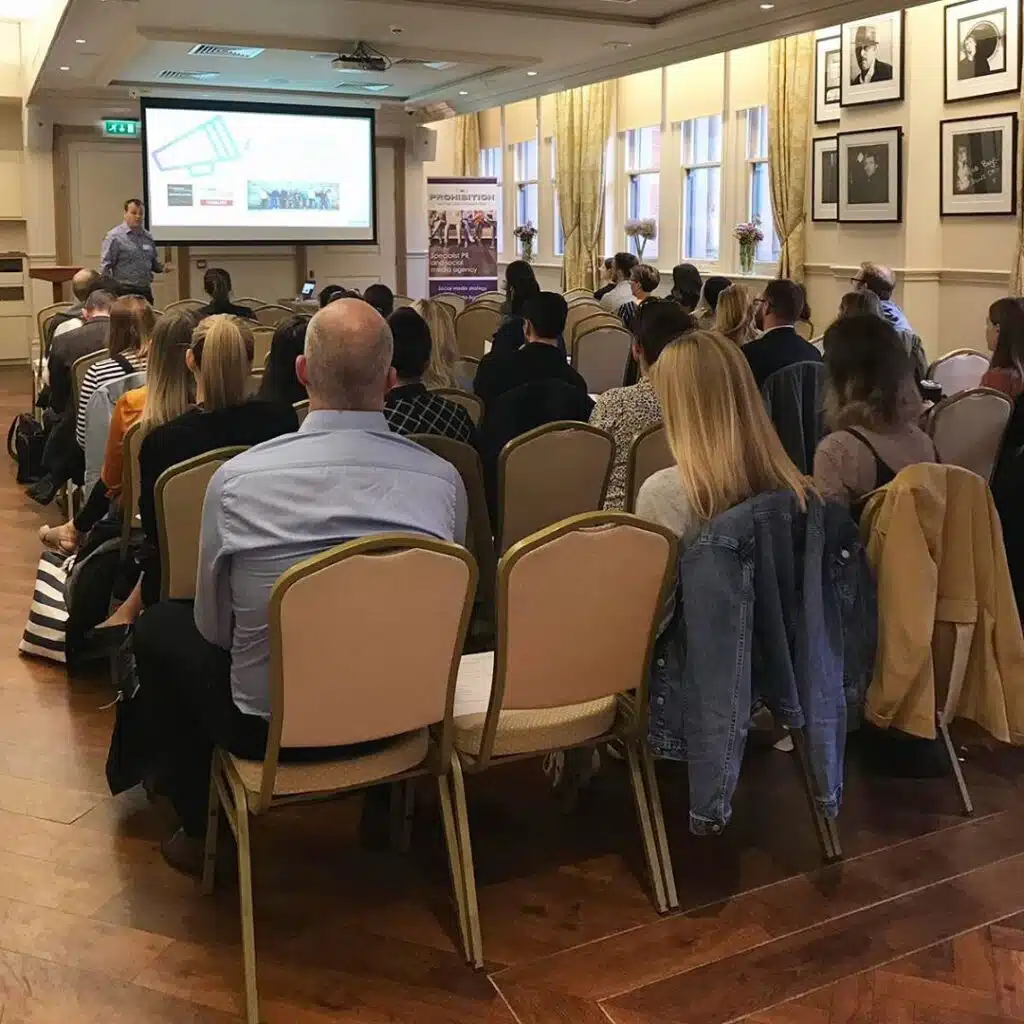
Give head office an in-person half or full day, and give stores short live online sessions repeated at different times so every shift pattern can attend. LSL Estate Agency Franchising scored our presenters 7.7/10 across 21 live sessions, with follow-ups to January 2025, which is the rhythm a store estate needs as new starters keep arriving.
What do UK advertising rules mean when retail staff post about products?
ASA and CAP guidance on recognising ads (August 2026) names ’employee’ as a connection to the brand, so anything a store colleague posts that features or refers to their employer will need to be obviously identifiable as advertising. A shop assistant’s video of new-season stock on a personal account therefore needs a clear label, because the CAP Code says marketing communications must be obviously identifiable as such, according to Committee of Advertising Practice’s CAP Code Section 02 (retrieved October 2026). Store staff training should show colleagues how to label posts about their employer, using wording head office has agreed before the first session.
A retail programme usually needs both advocacy and awareness sessions, as our staff advocacy and awareness training explains. Add disclosure wording to the store rules and have colleagues practise labelling a sample post.
Who should own what when store colleagues post on social media?
In my view, store posting needs a short set of rules, a steady supply of ideas and recognition so posting does not feel like unpaid extra work, and each one needs a named owner. Head office marketing should own the rules and the ideas, and store managers should own recognition. HR or L&D should own onboarding, store colleagues own the posting, and advertising disclosure belongs with whoever signs off the rules, because ASA and CAP guidance names employees as connected to the brand, according to ASA / CAP’s Recognising ads (August 2026). For the ideas themselves, see our guide to what social media content gets businesses the most engagement.
Our survey of Bango staff before training found people unsure what to post and posting rarely, which is how staff post when nobody owns the supply of ideas.
Ownership table for store colleague social media posting
| Task | Head office marketing | Store manager | Store colleague | HR or L&D |
|---|---|---|---|---|
| Short posting rules | Owns | Briefs the team | Follows | Advises |
| Disclosure wording | Owns the wording (ASA / CAP) | Checks posts carry it | Labels every post | Signs off |
| Weekly post ideas | Owns | Adds local prompts | Uses | None |
| Recognition for good posts | Shares examples | Owns | Takes part | None |
| Replies and complaints | Owns escalation rules | Knows the route | Hands complaints on | None |
| Onboarding new starters | Supplies materials | Covers rules on arrival | Learns the rules | Owns |
Comment complaints need escalation rules at peak, which community management training for comment replies covers. Fill in the table with real names before the first session.
What does social media training for retail teams cost?
From £1,200 for half a day, we run private retail training built around your stores and trading calendar, and a full day is £1,800 for up to six people, excluding VAT. Larger groups are quoted separately. For a per-seat comparison, see our guide on how much B2B marketing training courses cost per seat, and if you are weighing training against outsourcing, read our guide on whether to hire a content agency or train your team.
Repeated sessions for colleagues across all twenty stores count as a larger group, quoted once I know your shift patterns.
The Department for Education’s Employer Skills Survey (July 2025) found that Wholesale and Retail had one of the three highest volumes of skill-shortage vacancies, at 27,400. The same survey found skills gaps across all employers fell to 12% in 2024 from 15% in 2022, so do not tell L&D the gap is growing. Ask L&D to co-fund the store sessions as onboarding for a sector that keeps hiring, and fund the head office day from marketing.
To scope both tracks against your peak dates, see our retail training for peak and stores.
How should you sequence training from head office to the shop floor?
Our work with Bango and LSL points to a sequence that opens with a staff survey and closes with a second one, so you can compare confidence and posting frequency before and after. Over six weeks, survey staff, settle the rules, train head office, run live sessions for store managers and then colleagues, and measure. If peak trading is only weeks away, train head office now and start the store sessions in January.
- Week one. Send store and head office staff a short survey on what they would post, how confident they feel and how often they post.
- Week two. Have marketing and HR draft short store rules with disclosure wording, because ASA and CAP guidance says content from an employee featuring or referring to the brand will need to be obviously identifiable as advertising, according to ASA / CAP’s Recognising ads (August 2026). Store operations signs them off.
- Week three. Run the head office day on planning around peak, approval and measurement.
- Week four. Hold a live online session for store managers on the rules and recognition, and ask each to nominate a colleague champion.
- Week five. Run short live sessions for colleagues at different times and log every question. LSL’s branch programme with us drew 510 questions and comments.
- Week six. Re-survey confidence and posting frequency, and add the rules to onboarding. LSL reported about a quarter of attendees more confident posting and about one in five posting more, a reference point for your second survey.
When you are ready to scope week one, contact our team.
Where we are not the right fit
If you want an off-the-shelf e-learning module with LMS completion tracking for every colleague, we are the wrong choice, because our courses are private, bespoke and trainer-led. If you need a social media policy drafted with legal advice, take it to an employment lawyer first and bring in training once the policy exists.
If you want guaranteed follower growth or a promised sales figure, look elsewhere, because I will not promise a sales number I cannot prove social media caused. We also suit large head offices only in pieces: sessions run at six people as standard, with twelve as the practical ceiling, so book several small sessions split by team.
Which questions should you ask a retail social media trainer?
Put the questions below to any retail trainer on your shortlist, including my team, because the answers show whether a programme fits both a store estate and head office. A strong answer describes a method you can check later, such as a survey before and after the sessions.
Questions to ask a retail social media trainer, with strong and weak answers
| Question | Strong answer | Weak answer |
|---|---|---|
| Will you survey our staff before the sessions? | Yes, a short survey split by role, run before any session is designed | We use the same deck for everyone |
| How will you split store colleagues and head office? | Separate sessions by level, as in Bango’s 2 sessions of up to 3 hours (Bango) | One session for the whole business |
| How do you cover disclosure for staff posts? | Teaches that ads must be obviously identifiable and that employees count as connected (Committee of Advertising Practice; ASA / CAP) | Does not mention it |
| How will you reach colleagues across many stores? | Repeated live sessions, as in LSL’s 21 live sessions (Your Move) | One recording emailed round |
| Will the examples come from our stores? | Built on your own content, approval process and peak dates | Generic examples from other sectors |
| How will we know whether it worked? | A second survey on confidence and posting frequency | Attendance or likes only |
| What does it cost? | A published price per session, with larger groups quoted clearly | “It depends”, with no figure |
Frequently asked questions
Should shop staff post about the store on their personal accounts?
Yes, as long as you have agreed rules, a steady supply of ideas and recognition for the effort. Store colleagues often make more convincing content than head office, because they handle the stock and meet customers every day. Any post featuring or referring to the employer will need to be obviously identifiable as advertising under ASA and CAP guidance, according to ASA / CAP’s Recognising ads (August 2026).
Do retail employees have to label posts about their employer’s products as ads?
Yes. ASA and CAP guidance names ’employee’ as a connection to the brand, so content featuring or referring to the brand will need to be obviously identifiable as advertising. Agree a standard label at head office, put it in the store rules and have colleagues practise it in training, so nobody has to guess on a busy Saturday.
How long does social media training for store staff take?
A half day can suit head office teams, while shorter live sessions let store colleagues join around shifts. For Bango, I tailored the training by level and built two separate courses, LinkedIn for individuals and LinkedIn for marketing teams. Plan follow-up sessions too, because new starters arrive all year.
Is social media policy training different from employee advocacy training?
Yes. Advocacy gets staff posting about the organisation, while awareness and policy training stops staff causing problems and is usually driven by HR or communications. Retailers with a store estate often need both, and the two work well together as a full day, with advocacy coming after people understand the boundaries.
Can social media training for retail staff be delivered online?
Yes, and for a store estate it is often the practical format, because colleagues can join a live session from the shop floor without travelling. My team delivered LSL Estate Agency Franchising’s seven-course programme live to branch teams across the UK, so people could put questions to the trainer during the session. Repeat each session at different times so every shift pattern can attend.
Your best content is already standing in your stores
Keepmoat Homes had over 200 team members trained by us in crisis management, and the national housebuilder reported that customer satisfaction increased by 23%. Somebody in one of your shops is filming new stock right now, and your budget meeting decides whether they do it with your rules or without them. Talk to us about training built around your stores. You can find our other guides on the Resources page.

Sources
- Ofcom, Passive social media use, AI companionship, and online side hustles, April 2026. https://www.ofcom.org.uk/media-use-and-attitudes/media-habits-adults/passive-social-media-use-ai-companionship-and-online-side-hustles-uk-adults-media-and-online-lives-revealed. Retrieved 10 October 2026.
- ASA / CAP, Recognising ads, August 2026. https://www.asa.org.uk/advice-online/recognising-ads-social-media.html. Retrieved 10 October 2026.
- Committee of Advertising Practice, CAP Code Section 02 (undated). https://www.asa.org.uk/type/non_broadcast/code_section/02.html. Retrieved 10 October 2026.
- Department for Education / Skills England, Employer Skills Survey, July 2025. https://explore-education-statistics.service.gov.uk/find-statistics/employer-skills-survey/2024. Retrieved 10 October 2026.
